To truly discuss color let’s first talk about “clearing” of coat color. Silver beige are just like slivers the only difference in they are brown.

Stud Dog Silver Beige Tuxedo Standard Poodle Breed
At six weeks, their face and feet should already be silvery.
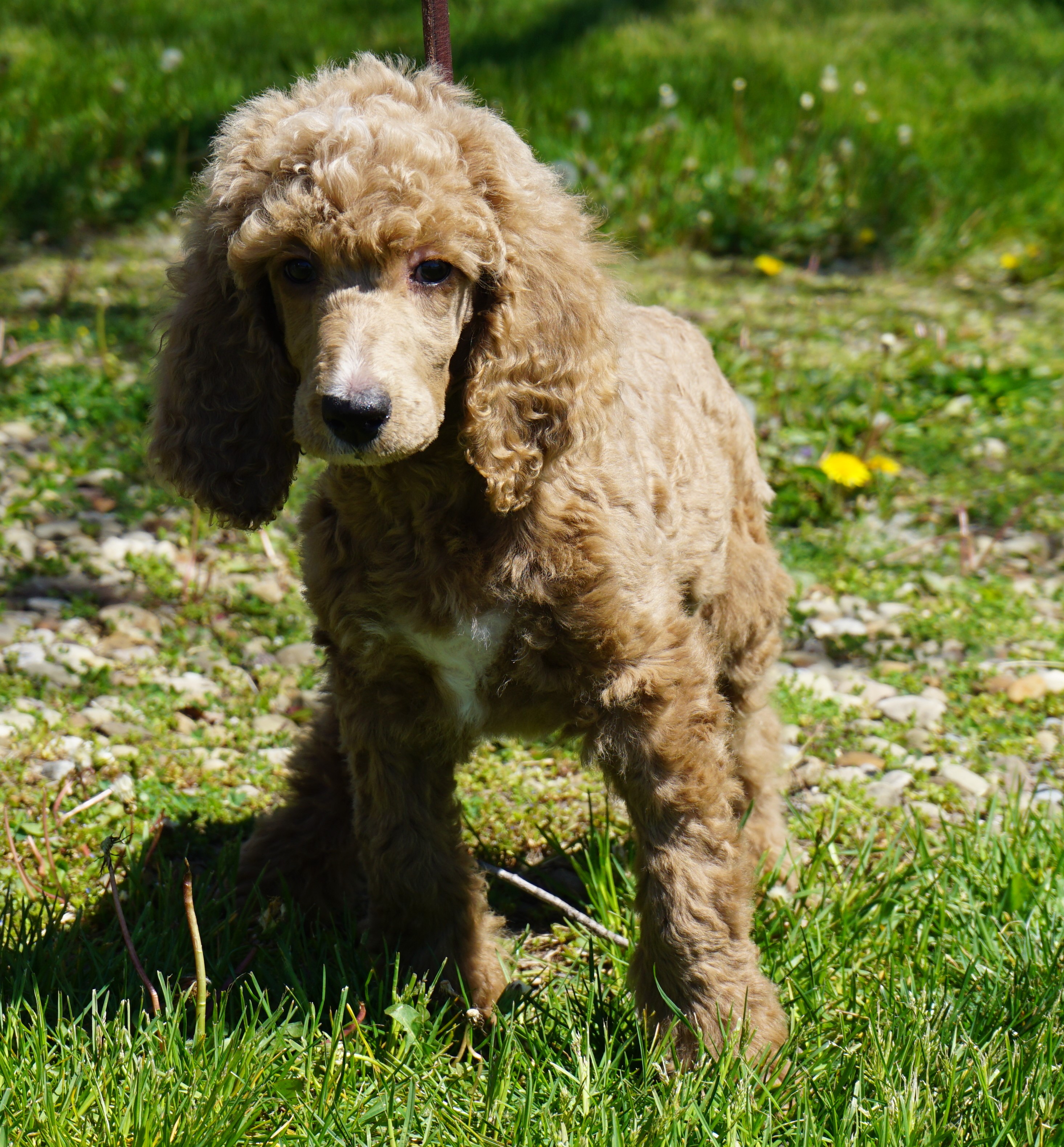
Silver beige poodle change colors. Blue and silver, and their brown versions cafe au lait and silver beige, are not caused by a dilute gene like in most other breeds, but instead by a greying gene that causes the color of the coat to clear over time. Silver beige is different from café au lait as silver beige poodles can have either brown or black noses. Unlike blue, silver, or silver beige these pups do not fade, they are actually born café au lait!
As we briefly mentioned, some poodle colors will change as they age. The most common colors we see on poodles are black, blue, silver, gray, white, brown, cream, apricot, silver beige, red, and cafe au lait. They usually changed color when the weather was going to change from sunshine to rain or snow.
As with all fading poodle colors, you may notice variations over time. So, for the sake of this article, we will focus on the classic silver standard poodles. But unlike silver beige poodles, there’s no need for the silver allele.
When poodle fur doesn't change color, it's called holding. poodle hair turning. There is no color change with a true black. At what age do poodles change color?
Café au lait's and silver beige are very easily confused, and hard to determine which is which. This color does not look the same as pure silver poodles. This is a poodle color that is a diluted brown and any true silver beige dog will be born brown.
They can be black blue silver brown cafe au lait silver beige cream apricot or red. Silver or beige poodles will be born brown instead of black and will turn silver. ~silver beige~ silver beige starts out looking pure brown.
By six weeks old, you should know if you have a silver poodle, and the coat turns completely silver over a year or two. It starts with the face and. Poodles come in a variety of solid base colors.
Generally, poodles change their coat color by the time they are 2. They will lighten with age just as silver poodles would. They tend to fade from a rich brown color to a lighter shade, but you’ll not really notice a huge difference after the change.
It commonly appears on paws, face, and other parts of the body. Silver beige poodles are born brown, but they lighten just like the silver. They are a lot like silver colored dogs because not until you shave their hair or look down into the roots, will you see the change coming.
When a puppy keeps the same color as he matures, this is referred to as “holding.” if a puppy’s color fades as he grows older, he is known as “clear.” for instance, a café au lait poodle will be born a dark brown color. Do the noses of puppies eventually change colors? If you were to shave these dogs, you would see the silver coloring at the roots of the coat, as well as the cream undertones in the fur.
This dilute poodle color occurs when a brown gene and fading gene mix. As adults, they are often slightly darker than the. Silver beige standard poodle these poodles must be born brown.
Black may also fade to gray or silver. They can be black, blue, silver, brown, cafe au lait, silver beige, cream, apricot, or red. Once they reach their final color, you’ll notice that they are either the usual silver beige or they are platinum silver with a brown tint.
Poodles' coats change color by two years old. Instead, café au lait poodles exhibit much more white mixed into their coats. By about the time that they reach six weeks of age, they will have a silver beige appearance on the face and the paws and full coat change should take place by age two.
If the dog has a tint (not enough to classify as a second hue), that is a ‘black with a mismark’. The poodle puppy coat change is unique: There are various shades of silver beige.
These puppies are born black or Silver, gray, and blue miniature poodles. Additionally, some poodles can also come in a variety of color combinations like black and brown, black and tan, black and apricot, black and cream, brown and apricot, brown and white, and many others.
Many opinions surround similar colors and are debated among breeders, owners and poodle fans when it comes to a particular poodle color. Aside from dark amber eyes, silver beige poodles have liver points. Silver beige poodles are always born brown, turning to a light brown color as they age.
It usually start with the face which spread right across the rest of the body over the next. More often than not, black partis with blue or silver tinting and/or guard hairs that are pure white or silver are more common. Silver poodles are born black, then their hair color fades into a lighter color with black points.
Cafe fade out to an all over color unlike the silver beige who end up with dark ears/tail. Mastiff poodle mix guide and sammypoo guide. Once you shave them, you can see the cream undertones to their hair.
Dark coats fade to lighter colors such as brown changing to apricot. Sometimes they turn almost platinum silver with a hue of brown to them. Silver beige poodles are born brown.
Basically, this is a diluted gray color. This initial color may go through another change and stabilize by the time the poodles are 3 years old. 5 out of 5 stars.
It carries the fading gene also. My standard tuesday is a cafe au lait, she 2 and 1/2 in this picture.
Typically, you will empty the waste drawer once per week if you have one cat. Some cats are a bit more prima donna though, and they might want this every day.

How Often Do You Change Cat Litter
If the tray is left to become dirty, your cat may prefer to use the floor instead!

How often should you do a full litter change. Do you really have to do that each and every week? Littering along the road, on the streets or by the litter bins, toxic materials or chemicals in litter can be blown or washed into rivers, forests, lakes and oceans, and, eventually can pollute waterways, soil or aquatic environments. You might wonder how long it's.
Then you should fill the litter box up to the top with hay. Ideally, once or twice a day of scooping cat litter from the litter box is recommended whereas the entire litter should be replaced once a week. I usually just add litter when it gets too low.
Plan on replacing litter boxes completely after 6 months to a year. Litter adversely affects the environment. How frequently you'll need to replace the filter is up to you (and the number of cats you have);
Empty the entire contents of the tray into a bin bag. If you notice unpleasant cat waste smell in your home, despite scooping waste daily, it's time to change the. What should you use to clean a cat litter box?
And the word enjoy is the right one. How often should you change your cat litter? You should also watch out for litter with zinc in it, as this can also harm your rabbit.
Based on recent data, 7 billion tons of. A 6.7 engine with full emissions runs hot and dirty, as you can see from the pictures below. And if you don't do it often enough?
Most people replace their cat litter every week, some every few weeks. Fresh step states, “you only need to replace the entire box of litter once every one or two months.” however, the instructions on a bottle of precious cat long hair cat litter states that you should change a box filled with 1 inch of litter about every 2 weeks. Peering under the valve cover of an “extended interval” engine often reveals an accumulation of sludge.
Always make sure any cleaning products you use are safe for cats. Keep enough litter in the box so your cat can dig a little. Change the litter completely and wipe the box down with soap and water once every other week or so to keep things fresh.
Use a paper towel to dry any damp areas and put fresh litter over the top. If you clean the box on the daily, you might only need to change this every 2. In order to provide your cat with a clean litter tray follow the steps below:
The recommended oil change interval in the owner’s manual should be adjusted depending on usage. All you have to do is scoop out and flush down the solids. Every few months or when you start to notice that the waste drawer smells, change the carbon filter.
Do this twice a week as a general guideline. Ideally, you should spot clean your cat's litter tray every day and replace the litter at least once a week. Depends on how many rats you have, how big your cage is, what type of bedding you use, their gender, whether they're litter box trained or not.
Remember that pregnant women should never change litter boxes due to the slight risk of contracting toxoplasmosis. Good types of hay to use include timothy hay, grass hay, and oat hay. This involves some of those items we listed earlier.
The key here is to keep a clean cage. Proper used cat litter disposal as tempting as tossing the litter into the kitchen trash can may be, it’s not the best option. If you fill your cat's litter box with clumping litter, replace it with completely fresh new litter once a month.
How often should you change a litter box? Empty and wash the litter tray. There are some pretty gross things that happen if you don't change a cat's litter box.
If you are using unscented litter or litter with no odor control, scoop out feces and urine clumps twice a day. Perform a full cleaning and litter change every one to three months. However, if your hamster enjoys a larger cage or bin, you may be able to go longer before the cage requires a full cleanup.
Smaller cages get dirty more quickly in which case yes, once a week is indeed the required schedule. With any crystal cat litter, it’s important to rake. Routine emptying of the full litter tray is vital.
If you clean the litter box daily, you might only need to change clumping litter every two to three weeks. Fleece and cotton liners and hammocks go in the wash, everything gets wiped down with disenfectant wipes, and then it gets reassembled. Each week you should remove all of the litter from the box and clean it thoroughly.
To set up the litter box, you should put about one inch of litter in the pan to start. Replace litter boxes every six months to a year no matter how well you clean, the porous plastic will start to break down and eventually absorb bacteria. If the cat feces is too stinky and creates a lot of odor, it is best to scoop it out immediately as soon as your cat has finished his business.
You can do so more often if you need to. Some cats aren’t as finicky though and are cool with replacing the litter once a week. Twice a week is a general guideline for replacing clay litter, but depending on your circumstances, you may need to replace it every other day or only once a week.
How often should you change cat litter?